
At Bayshire San Dimas, we recognize that caring for a loved one with dementia can take a toll on your own health, too. As a caregiver, you are likely to face moments that feel too overwhelming. While trying to address your loved one’s anxiety and agitation, you may become confused, too. Figuring out exactly what is making them anxious and agitated may be tough. But what if there’s a way to step back from these complex care responsibilities and let an expert manage them? Yes, it’s possible. A dementia care community can solve all of this for you.
Specialized dementia care utilizes predictable, structured, daily routines to help residents feel less agitated. To help them overcome feelings of anxiety, they minimize environmental sensory overload and employ expert validation techniques. This targeted approach helps individuals with dementia feel safe, understood, and anchored in their surroundings. By focusing on compassionate, clear, and empathetic listening, dementia care staff support and improve residents’ daily living experiences.
Specialized dementia care communities, also known as memory care communities, use a practical approach to caregiving. Their tailored care respects residents’ dignity and desire to maintain autonomy. Their individualized support helps residents feel calm and turns moments of uncertainty into comfort. Here’s how a specialized dementia care community reduces anxiety and agitation.
Gentle, Calming, Reassuring Communication
Moving to a new place, such as a memory care community, can itself become a major cause of anxiety and agitation. Individuals with dementia may still long for their former lives, including the routines they had at home and the conversations they once enjoyed. At times, they may get agitated or anxious. To this end, the memory care staff uses gentle, calming, reassuring communication to help elevate their mood. This helps residents live in the moment and feel better about themselves and the environment around them.
Empathetic Listening
Dementia patients may often feel overwhelmed with emotions and might feel like they have a lot to say. While not everything they say may be factually accurate, staff still listen and address their concerns. They let the patients express their feelings and understand the underlying emotion that may be making them anxious and agitated. Active and empathetic listening also helps residents trust caregivers more.
Using Nonverbal Cues
It’s typical for individuals living with dementia to struggle to communicate clearly. The disease’s progression affects their ability to find the right words. This can make it difficult for them to express themselves. This is where dementia care staff utilize nonverbal cues, including gestures, posture, and facial expressions, to communicate. Even a gentle touch on the shoulder can help the resident feel heard and reduce the likelihood of anxiety and agitation.
Creating A Familiar, Calm Environment
While it’s not possible to provide the same level of familiarity and comfort that the resident once had at home, dementia care staff still do a lot to instill a sense of predictability and familiarity for residents. They limit background noise, reduce harsh overhead lighting, and remove any clutter that may affect residents’ daily living experience. Soft colors, simple room layouts, and structured living spaces help residents feel comfortable, which reduces anxiety and agitation.
Structured Daily Routines
Without predictability, dementia patients may struggle to maintain a good quality of life. Not knowing what’s ahead in the day makes them feel anxious. Not being able to decide or even know what’s next makes them feel agitated. This is why dementia care staff introduce them to structured daily routines. These predictable schedules, including consistent times for waking, meals, and sleeping, anchor their day and reduce confusion. Having a sense of control over their daily life fosters confidence and dignity.
Staff Consistency
Familiarity also comes from seeing familiar faces, and if those faces offer care and support, that provides an added sense of comfort. Seeing familiar caregivers each day helps residents feel secure and less overwhelmed by daily life. Each caregiver knows what’s best for a resident. They provide tailored care based on their routines, preferences, and emotional needs. They anticipate a resident’s needs to help them regulate their emotions in situations that could otherwise cause anxiety or agitation.
Sensory Support
Too much stimulation can cause several issues for dementia patients. They need a sensory-friendly environment that’s adapted to their living preferences and cognitive abilities. Professional dementia care provides this through a thoughtfully designed memory care environment. Throughout the community, there is no harsh lighting, high levels of noise, overly vibrant colors, or complex decor.
Comforting Activities
Emotional comfort can be supported through certain physical activities. These include basic movement exercises like light stretching or brief walks outdoors. These help individuals with dementia release tension and enhance their sleep, which directly helps reduce anxiety and agitation. Staff also provide tactile comfort by allowing residents to hold soft blankets or textured objects for physical reassurance.
Planned, Regular Socialization
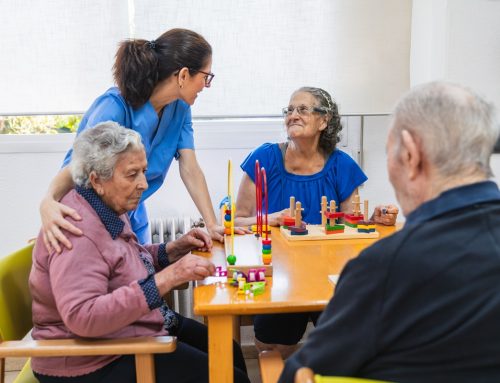
Despite losing their cognitive abilities, dementia patients are still able to respond emotionally. Memory care communities promote organized socialization to help residents maintain their social wellness and experience a greater sense of well-being. Group outings, movie nights, community games, and communal dining all foster shared interactions. These frequent social interactions help residents feel more connected and fulfilled in their lives, reducing their risk of anxiety and agitation.
Bayshire San Dimas – A Renowned Specialized Dementia Care Community
At Bayshire San Dimas, we understand how effective memory care communities can be for individuals with dementia. In addition to offering them a safe and structured living space, these communities can help manage and reduce anxiety and agitation. By using several proven nonpharmacological approaches, the professional caregiving staff reduces anxiety and agitation. Professional dementia care focuses on proactive management rather than reactive care.
Families struggling to manage their loved one’s dementia-related complexities can contact us at Bayshire San Dimas. Rooted in person-centered care, our approach to caregiving focuses on supporting a high quality of life for residents. Whether your loved one has Alzheimer’s disease or another form of dementia, we can provide the support they need. Schedule a visit and let us guide you through a community tour and show you how our care can support your loved one.