
At Bayshire San Dimas, we recognize that the drive home after a dementia diagnosis can feel longer than normal. Families often leave the doctor’s visit with a folder of medical papers but not much understanding of what to do next. Questions start right away. Should you get another opinion? Who needs to know about the diagnosis? Is it time to stop driving? Do you need to take any steps right away?
Knowing what to do after a dementia diagnosis is not about solving every problem in one week. It is about taking the steps in the right order. The first 90 days matter because some choices can only be made then. During this time, families may be navigating next steps after the newly diagnosed dementia, getting legal documents ready, talking about driving after the diagnosis, and deciding to seek a second opinion or memory clinic evaluation.
This is also the time to start planning for early-stage dementia while the person is still able to take part in decisions about their future. With a plan for the first three months, families can reduce worry and feel more confident moving forward.

Days 1–14: Understand What You Were Actually Told
The first two weeks should focus on learning about the diagnosis and making big choices. Many families worry so much about what will happen that they forget to learn everything they can about the condition. Before considering legal, financial, or lifestyle changes, it’s important to understand what the diagnosis means and what it could lead to.
The Diagnosis vs. The Stage
A diagnosis of dementia tells you about the condition. It doesn’t always show how much it affects everyday life. The stage of dementia usually affects short-term planning more than the diagnosis by itself.
For example, two people might get the diagnosis but need very different amounts of help. One person could still do tasks on their own, while another person might already need help with medicine, doctor visits, or money.
Families should ask doctors to explain both the diagnosis and the stage of dementia. Learning which skills are still intact and which problems may come up soon helps families make better choices.
Questions For The Follow-Up
Families usually think about things they want to ask after they get back home. That is why going back to see the doctor again is so helpful in the first two weeks.
Making a list of questions to ask the neurologist is a good idea. This way, they can make sure they cover what worries them. They might want to ask what treatment to choose, what medicine they can take, how the symptoms will change over time, and what help is available through community resources.
It can also help to bring another family member to the doctor’s appointment. Having someone else listen can help you understand what the doctor is saying and remember things you might otherwise forget.
When A Second Opinion Helps
Getting a second opinion from a memory clinic is a good idea. This doesn’t mean you don’t trust your primary physician. It just means you want more information about what is going on.
A second opinion from a memory clinic can be really helpful when symptoms don’t seem to match what the doctor says. It’s also helpful if the family isn’t sure which treatment to choose.
Memory clinics have different kinds of doctors who work together to figure out what is going on with the individual’s memory and thinking. They can help you understand what is happening and what you can do to take care of your loved one. Getting information now can help you plan better for the loved one’s future and available care options.
Days 15–45: Paperwork With A Closing Window
This period is referred to as a “critical legal capacity window,” when the individual still has the mental capacity to sign vital documents. Because the condition progresses, families must move quickly with the paperwork, or they may miss the legal window. In addition to preparing legal documents, they will also handle medical records related to the diagnosis. They must gather all medical records in one place, as they may be required later for insurance claims and future medical appointments.
Capacity and Why Timing Matters
Many people confuse a diagnosis with an individual’s incapacity to sign documents and complete legal paperwork. However, this isn’t true, as a diagnosis alone never means a person can’t sign documents. Capacity depends on whether they understand the specific choices presented to them at the time of signing. The family should proceed with the paperwork during the capacity window, or they may face restrictive, costly, and lengthy court-appointed conservatorship or guardianship proceedings. Moreover, documents signed later in the disease progression are easier to challenge in court.
The Documents to Prioritize
Certain core documents are essential to prioritize while the loved one is still in the capacity window. Preparing them provides peace of mind for both the affected individual and the family. It’s also wise to hire an elder law attorney or physician to help with the paperwork and ensure it’s valid.
Here are the vital documents the family must prepare:
- Durable Financial Power of Attorney: Appoints a trusted agent to manage bills, property, and banking.
- Healthcare Power of Attorney / Proxy: Authorizes a person to direct medical care choices.
- Living Will / Advance Directive: Directs specific preferences for future and end-of-life treatment.
- HIPAA Authorization: Grants appointed individuals permission to share details with caregivers.
- Last Will / Living Trust: Estate planning that includes asset distribution and executor choices.
Days 15–45: Safety Decisions
The next step for the family is to think about the loved one’s overall safety and security. Because their loved one will live at home for a considerable time, they need to create a safe environment where the loved one can live without risk. Likewise, they need to consider other ways to support their loved one in leading a healthy life. This would include deciding whether to let them drive on their own and assessing their ability to manage their medication regimens.
Driving
A dementia diagnosis doesn’t automatically mean a person can no longer drive safely. It simply means you need to consider whether they should be allowed to drive. For this, the family needs to evaluate the loved one’s driving skills and watch for warning signs like getting lost or delayed reaction times. If you notice issues with your loved one’s driving, plan an alternative. Arranging reliable transportation can help them preserve independence and dignity.
Medications and Finances
The physician might recommend some medications to your loved one immediately after the dementia diagnosis. Make sure your loved one takes these medications as prescribed. Create a regular medication routine and stick to it. Medication management isn’t just about taking the right medication but the right dosage and timing, too. Because dementia affects decision-making, it’s important to plan for your loved one’s finances. To safeguard their financial interests, you can add yourself or a family member as an authorized user on the bank account. Moreover, you can share your preferences with the agent appointed under a Durable Financial Power of Attorney.
The Home
Creating a safe home environment is one of the most important things you can do to foster a more engaged and stress-free life for the loved one with dementia. Know that dementia’s progression makes them prone to wandering, falls, and accidents. They also become susceptible to safety risks in their everyday routines. You can manage wandering by installing bells or alarms on exit doors. You can restrict kitchen access or supervise them while they are there. You can make bathrooms fall-proof with non-slip mats and grab bars.
Days 45–90: Building The Care Team
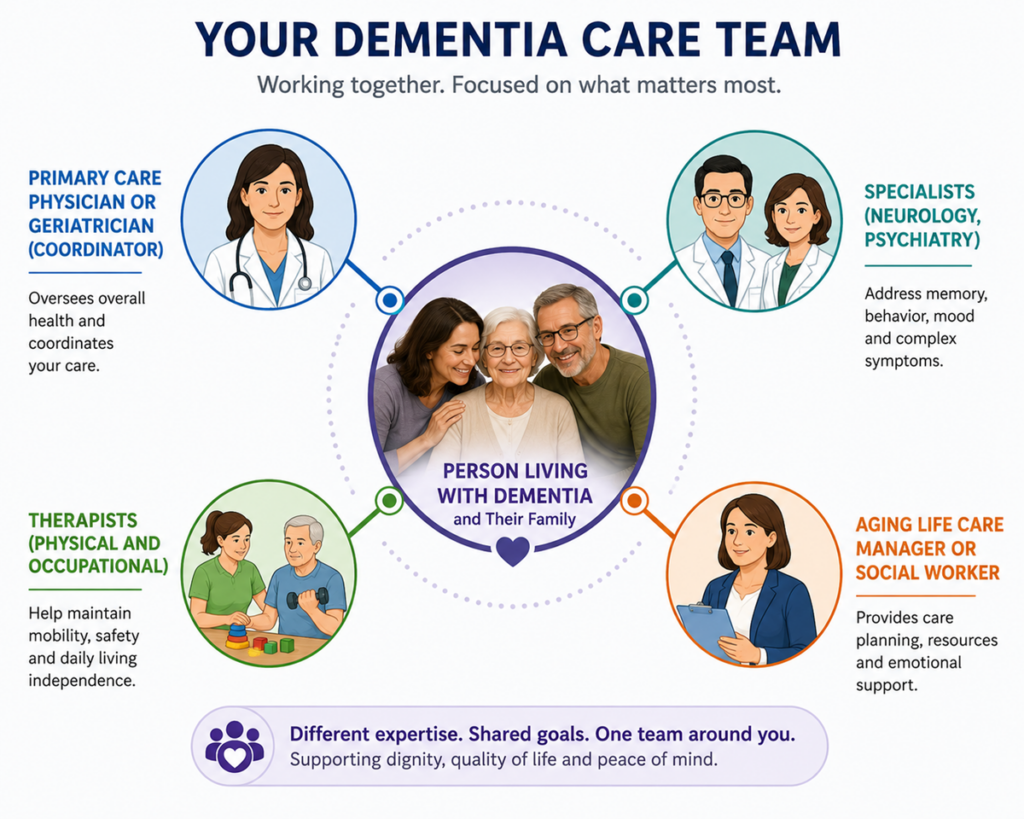
Although dementia primarily affects cognitive function, it can also affect many aspects of a person’s life. So families need to shift their focus from initial shock to building a healthcare team for their loved one. Siblings can work together to assemble a clinical and professional care team. These are the typical healthcare professionals they need to collaborate with:
- Primary Care Physician or Geriatrician: This role acts as the central coordinator, managing overall health and treatment interactions.
- Specialists: This includes neurologists or psychiatrists to monitor cognitive changes, manage medications, and address behavior or sleep concerns.
- Therapists: Includes physical and occupational therapists who will help create a safe living environment and do driving evaluations.
- Aging Life Care Managers / Social Workers: Will help navigate complex local health systems and long-term care options.
Days 45–90: Including The Person In Their Own Plan
This is when the focus shifts to creating regular routines and empowering the loved one to shape their own care plan. Place special emphasis on preserving their voice, dignity, and independence so future arrangements support their values and care preferences.
Starting To Look Ahead Without Deciding Everything Now
Even though it would be around 3 months after the loved one was diagnosed with dementia, the situation may still feel unreal to you. Acknowledge that the condition is real and needs professional care and attention. While it’s important to make timely decisions, what matters more is not rushing. Planning for the future in steps helps you pace decisions, protect your autonomy, and reduce stress without feeling pressured to find all the answers at once.
Where Families Find Support
Navigating a loved one’s dementia care journey is a complex process that requires patience. Local resources and government agencies focused on dementia can provide reliable guidance on managing dementia and finding professional support. Families can also seek support from national nonprofits and online communities for recommendations on available care options.
FAQ
- What should we do first after a diagnosis?
The family must take a moment to accept the fact that their loved one has been diagnosed with dementia. The news can feel emotionally overwhelming, so it’s best to avoid making any major decisions about the loved one.
- Is it worth seeking a second opinion or a memory clinic referral?
The family can seek a second memory clinic evaluation if they feel the original diagnosis was unclear, their concerns were dismissed, or they want a fresh perspective on available treatment options.
- What legal documents must be signed while capacity is intact?
Essential documents to sign include a durable financial power of attorney, healthcare power of attorney, living will, HIPAA authorization, and an updated will or living trust. This must be done while the individual’s cognitive capacity is still intact to understand the choices and their consequences.
- What about driving?
It’s best to assess whether the individual’s driving capabilities are still intact or if they are facing certain safety risks. In most cases, individuals can drive safely with frequent evaluations; they should stop driving when they can no longer do so safely.
- When should we start looking at care options?
It’s best to start researching and planning for care options immediately after the diagnosis. This allows the individual to share their preferences for the care options they want. During this time, the family can also plan for financial and legal matters without waiting for a crisis.
Bayshire San Dimas – The Dementia Care Partner You Can Trust
At Bayshire San Dimas, we understand how difficult it can be for a family that has just learned about their aging loved one’s dementia diagnosis. During this overwhelming period, families have this common question—”What can be done now to slow decline or manage symptoms?” The answer is to choose a trusted care option like ours at Bayshire San Dimas. Waiting for things to get worse will put the individual’s overall well-being at risk.
By choosing us, families can help their loved one get the support they need to live a fulfilling life. With person-centered care programs, we support residents’ holistic well-being and quality of life. With us, residents find plenty of engaging and meaningful opportunities to thrive and be their best selves. Contact us to schedule a tour today and see firsthand how we support our residents’ comprehensive care.